
Your cart is emptyAdd something meaningful and it will appear here.
What to Pack in a Daycare Backpack: A Practical Checklist
Build a daycare backpack checklist around your center's rules, spare clothes, daily handoffs and meals. Learn what to pack and what can stay at daycare.
 Written byName & Kin
A ready-to-go daycare bag gives busy mornings one less loose end. Spare clothes have a place, paperwork is easy to find, and the handoff can stay simple. Start with your center’s list, then use this checklist to organize the items your child needs that day.
Confirm what the center provides
Before buying supplies, ask about meals, snacks, drinking cups, rest-time bedding and storage. Some centers keep a labeled clothing supply on site; others send everything home each evening. Check how staff want clean and used clothes separated and where any special instructions belong.
Also ask which items are not permitted. Toys, accessories and comfort items may have classroom-specific rules. Medicines and other items requiring staff handling should follow the center’s process rather than being left in a child’s ordinary packing compartment.
Your daily daycare packing checklist
Use this daycare backpack checklist as a starting point, then adapt your daycare packing list to the center’s meal arrangements and supplies already kept on site.
Use the groups below alongside your center’s own list. Print the checklist to tick by hand, or use it as a quick reference while packing. Bring the quantities the center requests and leave out anything it provides.
Clothes and outdoor essentials
- ☐ Spare outfits: The requested changes of clothes, including tops, bottoms, socks and underwear or diapering supplies as appropriate. Keep clean clothing together in a labeled pouch.
- ☐ An outdoor layer: A jacket, cardigan or sun hat for the day’s weather and planned activities.
- ☐ A used-clothes bag: A separate bag or pouch if requested, ready for staff to return worn or damp clothing.
Drinks and meals
- ☐ Bottle or cup: The labeled type your center requests, with the lid checked and a place where staff can easily find it.
- ☐ Meals and snacks: Food containers when families provide food, packed and labeled according to the center’s instructions. Add a separate lunch bag if that suits the handoff.
Paperwork and familiar comforts
- ☐ Communication: Required forms or a daily folder, kept flat and easy to retrieve. Check the actual folder size when choosing the backpack.
- ☐ An approved comfort item: The age-appropriate item your center permits, labeled and packed where staff expect to find it.
Label belongings according to the center’s instructions. A name on the backpack helps distinguish the bag, but the separate bottle, container or jacket may still need its own label. Check labels after laundering or repeated use.
Decide where lunch belongs
If families provide food, ask how containers are stored and handed over. A separate lunch bag can make that handoff more convenient. If the center provides meals, you may not need an extra bag at all.
Compare your closed food containers, including lids and latches, with the lunch bag’s usable space before packing. A separate bag keeps the meal handoff organized; plan any cooling or temperature-control arrangements around the center’s food-storage instructions and the equipment you use. Keep containers securely closed and confirm how staff want food delivered and stored.
A bag for the daycare routine
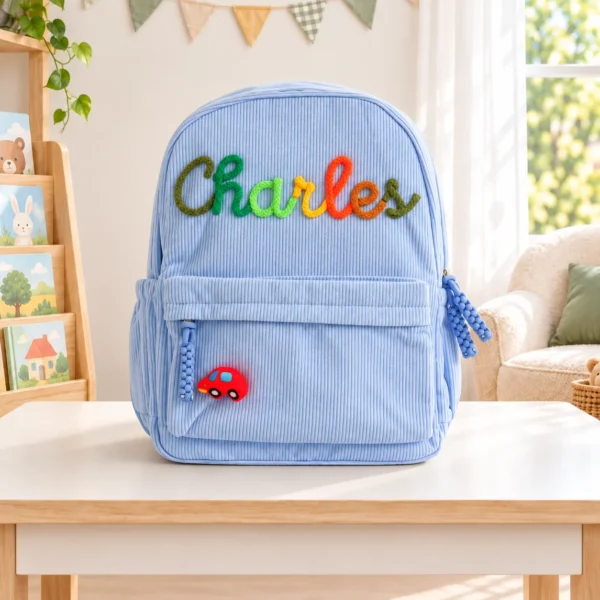
Give daily belongings a personal place of their own, with a corduroy backpack chosen around the center’s packing list.
- Choose Small or Large
- Raised yarn name lettering
- A useful option when lunch already has its own bag
Keep daycare lunch separate
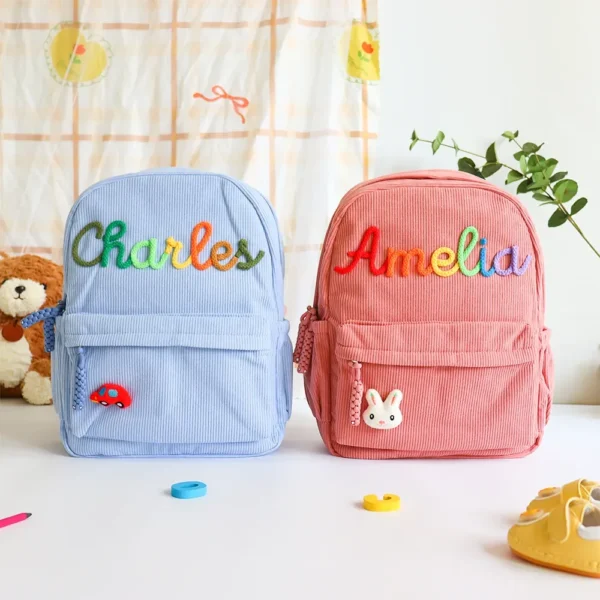
Choose the matching pair when belongings and packed food need to be handed over in separate bags.
- One backpack and one lunch bag
- The child’s name on both pieces
- Compare each bag with the items it will carry
Pack for an easy morning handoff
Group items by purpose and keep the daily arrangement consistent. Put paperwork where it can be retrieved without emptying the bag. Keep spillable containers separate from paper and spare clothing using a suitable container or pouch you already own.
At pickup, remove used clothing, containers and paperwork. Replace consumed supplies and check tomorrow’s schedule. A short evening reset makes the backpack easier to use than a large collection of just-in-case items that never gets reviewed.
Choose the bag after making the list
Lay out the essentials before comparing backpacks. The individual Name & Kin daycare backpack is a simple choice when meals are provided or you already have a lunch bag. The daycare set pairs a backpack with a separate matching lunch bag for food brought from home, with the child’s name on both pieces. Choose the combination that makes your everyday handoff easier, using the product dimensions to match your packing list.
Frequently asked questions
Do I need a lunch bag for daycare?
If your daycare provides all meals and snacks, an individual backpack will often cover the routine. If you bring food from home, a separate lunch bag gives containers their own place away from clothes and paperwork, and makes them easier to hand to staff. Follow the center’s instructions for storage and cooling.
Should spare clothes travel every day?
Keep a labeled supply at the center if that is its routine, and replace used items at pickup. If clothes travel home each day, use the checklist above to replenish the requested changes for tomorrow.
Can one name label cover every item?
Usually items are handled separately, so follow the center’s labeling instructions for each belonging rather than relying on the backpack name alone.
Related guides
Your feedback
Was this article helpful?
A quick answer helps us make future guides more useful.